The shell
This isn’t just jewelry. This is a piece of the ocean’s engineering.
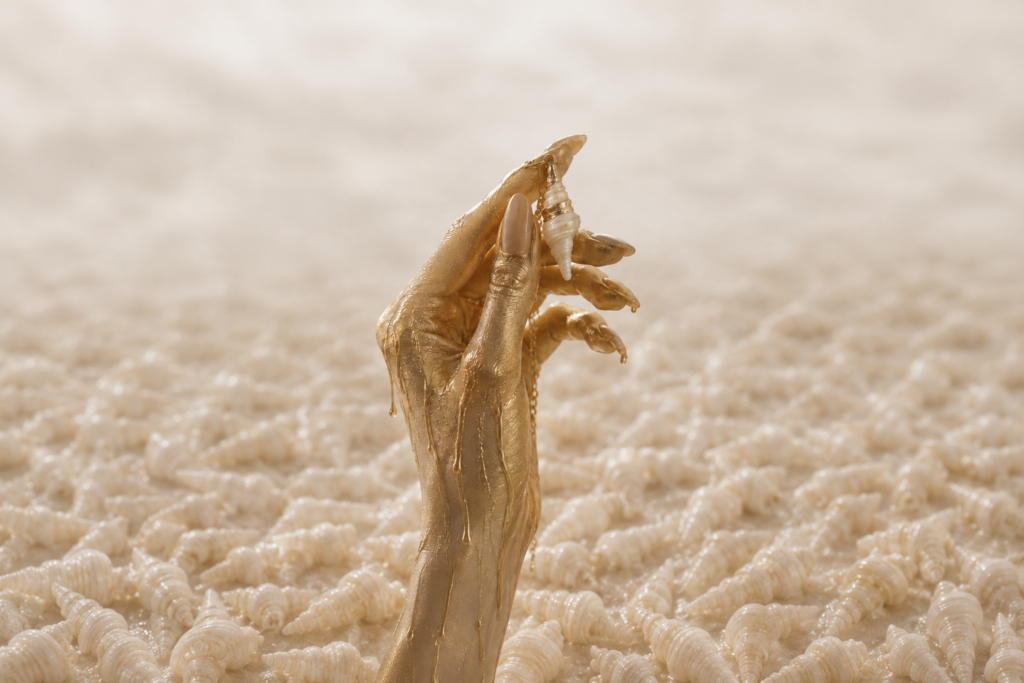
The shell belongs to a marine sea snail from the family Fasciolariidae, known for their elongated, spindle-shaped structures and high spirals. These shells develop gradually over years as the animal deposits microscopic layers of calcium-based material, extending the structure little by little as it grows.
Its shape is functional before it is beautiful. The narrow tapered body helps reduce resistance in moving water while maintaining strength through a lightweight spiral construction. Every new layer follows the geometry of the one before it, creating a continuous logarithmic spiral, one of the most efficient growth patterns repeatedly found in nature.
For centuries, rare spiral shells like these were collected far beyond the coastline itself. In parts of Europe and Asia, unusual marine shells were treated as natural treasures, displayed by nobility, scholars, and early collectors fascinated by their precision and rarity.
No two spindle shells are identical. Variations in water conditions, minerals, depth, and time shape each one differently, which is why natural shells carry imperfections that manufactured objects cannot reproduce.
What makes the spindle shell remarkable is not decoration, but precision. A structure built entirely through patience, pressure, and repetition.
What you’re looking at is a real biological form shaped over years by the mechanics of growth, motion, and the sea itself.